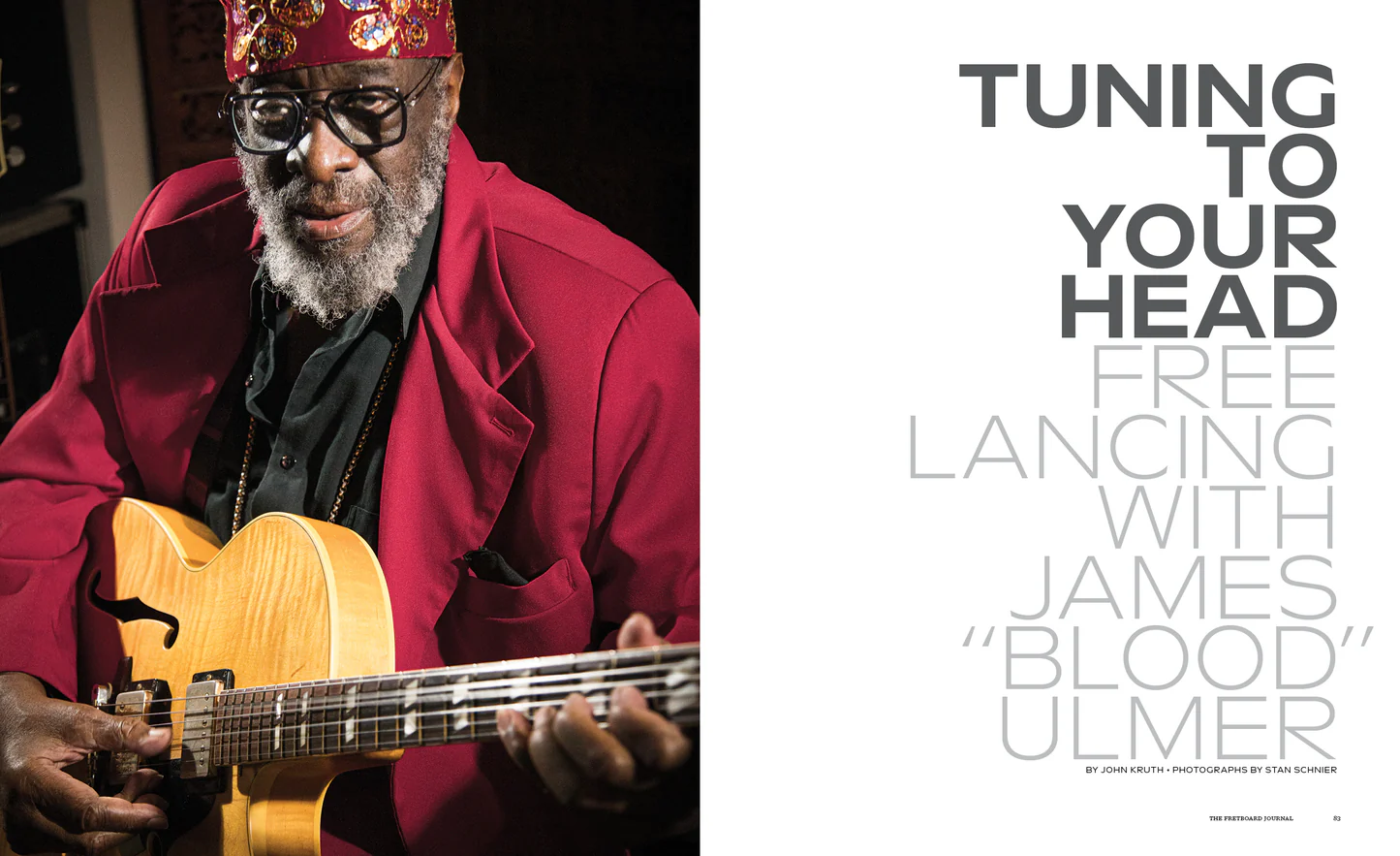
Editor’s Note: Jazz, funk and blues guitar legend James “Blood” Ulmer passed away on June 3, 2026 at the age of 86. We profiled Ulmer in a lengthy Fretboard Journal 50 profile penned by contributor John Kruth (with photos by Stan Schnier). To pay tribute, we’re sharing the story here in its entirety.
Tuning to Your Head
Free language with James “Blood” Ulmer
The eldest of nine children, James “Blood” Ulmer was born in 1942 and raised in rural St. Matthews, South Carolina. Brought up in the church, Ulmer’s father, a Baptist preacher, showed him his first guitar chords at the age of 4.
“My daddy played guitar and good harmonica and would sing to me and put my fingers on the guitar strings. When I was a kid, the only instruments around were an organ and a guitar,” Blood recalled. “We had a pump organ that was maybe a hundred years old. Somebody would be down on the floor, pushin’ the pedals while someone played the bass keys and somebody else played the high part.”
In elementary school, young James joined his father’s gospel group, the Southern Sons, and traveled the South over the next seven years, where he was inspired by vocal groups like the Five Blind Boys of Alabama and the Dixie Hummingbirds. “There were four of us,” Blood said. “And we got pretty good…playing church songs.”
While the Carolina Piedmont region is famous for its distinct brand of fingerpicked blues and rags, played and recorded by guitar masters Blind Boy Fuller, Reverend Gary Davis and Brownie McGhee, Blood claimed to be unfamiliar with their music. “I don’t know nothin’ about that music!” he groused. “We didn’t have no records and nothin’ to play ’em on. Even if I did, my mama would’ve whipped my ass if it wasn’t a record about Jesus. We came from the church. We couldn’t play no stuff like that. They were playing that music in order to survive and make an identity for themselves. So, I didn’t play like that. Copying another man’s style could get you killed,” Blood stressed. “You were messing with their livelihood.”
Ulmer’s lifelong relationship with the instrument began with his “first real guitar, a Stella.” When I mentioned that Lead Belly also played a Stella, Ulmer replied: “Lead Belly! It was a damn shame the way people treated him. Those musicians never could travel anywhere without somebody making a threat on their life…made them ride in the back of the bus. They could have done so much more. They mostly played what record companies wanted them to play, what they thought would sell. The business has crushed the real American music. They don’t want you to know where it came from. Their idea of what music is supposed to be comes from Europe! Those musicians never got the chance to express themselves and play the real American music. I couldn’t put up with that kinda shit. I woulda been dead if I had to live like that.
“After I graduated high school, I wanted to get outta South Carolina. My father told me, ‘I can’t send you to college, but you can go into the army, and they’ll put you through school. So, I went downtown, and flunked every test they gave me ’cause all those questions were made for people living on a farm. I didn’t live on no farm! All I had to do was go to school and church and sing!”
Classified 4F by the Selective Service, Ulmer headed north to Pittsburgh and lived with his aunt. “She told me to get a job. ‘I’m gonna charge you six dollars a week for rent and I don’t want you stealing!” Blood’s cousin found him work at a local hospital cleaning pots and pans. “And that’s where I met my first wife. She was a cook,” Blood said, chuckling. But after receiving a check for a lousy 15 dollars after two weeks of work, Ulmer made a solemn vow to never live as a wage slave.
“Damn! That’s the last time I looked for a job! At the time, there were all these doo wop groups singing all over the streets on each corner and they were making some money. So, I went up and asked, ‘Y’all need a guitar player?’ They said, ‘Yeah!’ I said, ‘But I ain’t got no guitar!’ They got me a Silvertone guitar and a Silvertone amp! I went to the rehearsals and right then and right there—boom! [claps his hands loudly] I had a gig with the Savoys! I stayed with them for a while and then got me a gig playing with the Del-Vikings [one of the few racially integrated doo wop groups at the time, best known for their hits “Come Go with Me” and “Whispering Bells”]. That was 1958. I was 18 years old when I started playing guitar for my living. Been doin’ it all my life!”
Around this time, Blood crossed paths with a young George Benson playing guitar in front of his house in Pittsburgh. “George Benson was a bad motherfucker! He played like any guitar player you could name when he was 13 or 14 years old. You’d say ‘Gimme Wes,’ and he’d do it. He could play like anybody, but he could only copy somebody else. He didn’t have his own song!” Ulmer emphasized. “He was giving lessons, but you only needed one to get it. Then he went on the road with [jazz organist] Jack McDuff.”
Blood recalled playing an early prototype Fender Stratocaster around the same time. “When I was 18 or 19, they were just about giving them away, just to get people to play them. But it’s the way you got the guitar tuned that makes a guitar a guitar. It’s got six strings and frets. Does it feel right in your hands? Does it play smooth? It don’t matter what name is on top. The important thing is to play music!”
In 1965, Blood got a gig playing in organist Hank Marr’s group at The 502 Club in Columbus, Ohio. By the end of the 1940s, Columbus had transformed into a red-hot boiling pot for R&B and jazz. Saxophonist Rusty Bryant, who sold a million copies of the funky, chugging “Nite Train,” and jazz diva Nancy Wilson were regarded as local royalty. The city was a regular stopover for the touring big bands of Duke Ellington, Cab Calloway and Lionel Hampton as well as Miles Davis, Art Blakey’s Jazz Messengers and Dizzy Gillespie’s groups. Lights from theaters, restaurants and nightclubs illuminated the Ohio night sky like a small Las Vegas. Nightclubs like The 502, The Regal and The Cadillac Club were the hot spots where the musicians played for keeps and the crowd dressed to kill.
Hitting the road with Hank Marr’s band, Blood toured the States and Europe, while making his recording debut on the organist’s 1967 release Sounds from the Marr-Ket Place. Built on Marr’s soul grooves, the album features a slinky guitar lead from Ulmer and a robust tenor sax played by George Adams, best known for his work with Charles Mingus. While echoes of Wes Montgomery can be heard in Ulmer’s playing, the choppy, angular phrases that would soon define his style added fire to a set of otherwise cool lounge vamps.
“When I first heard Wes, I thought, wow! He’d really found something on the guitar! I wasn’t a copycat or trying to figure out how to play like him. I just liked the sound he made! It was just like somebody talking,” Blood said.
Ulmer eventually crossed paths with his inspiration one night during a week-long gig with Marr at The Hubbub Club in Montgomery’s hometown of Indianapolis. “We played two sets and Wes walked in and stood at the bar all night long.” Meanwhile on the bandstand, Ulmer grew anxious, hoping Montgomery would complement his guitar playing. When the band took their break, Blood strolled past his hero a few times and even deliberately stood beside Montgomery at the bar, but Wes never uttered a word. “He never said anything. And after that gig, I just made a left turn and stopped trying to play that way [in the typical style of jazz guitarists of the day].” Montgomery’s silent snub inspired Blood to no longer look towards others for encouragement or inspiration but to develop his own voice. “After that, I didn’t follow other men. I just followed the guitar!” he said.
In 1967, Blood headed for Detroit, spending the next five years there. “That’s a baaad town—full of great music! I got a job teaching at a guitar workshop for about two or three years.” While best known for the Motown sound of the Supremes, Smokey Robinson and Stevie Wonder, the Motor City also had a great jazz scene, providing venues for Miles Davis, Dexter Gordon and John Coltrane. The Jones Brothers—Hank, Elvin and Thad, multi-instrumentalist Yusef Lateef, pianist Alice McLeod (Coltrane) and guitarist Kenny Burrell—all called Detroit home.
At a session for Blue Note Records in August 1969, Blood could be heard comping choppy chords and adding snaky, fiery licks to the cool groove of organist Big John Patton’s album Accent on the Blues. Around this time, Ulmer was jammed with a crew of wild musicians at The 20 Grand club who later become world-known as Funkadelic.
Following a six-month gig at the Bluebird, the club owner kindly staked Blood the bread to go to New York in hopes of meeting and playing with Miles Davis.
“When I came to New York, I was 31 years old, and never thought nobody could make no money playing free music So, I always played structured blues and R&B and dance music. But then I abandoned it. I just totally went another way and got my own group together, ‘Blood and the Blood Brothers!’ Ulmer said with a chuckle.
Jamming with a cast of improvisers from Joe Henderson, Rashied Ali and Arthur Blythe to Paul Bley, he still kept one foot in the straight-ahead jazz world, gigging with Art Blakey’s Jazz Messengers at Minton’s Playhouse in Harlem. But his stint with Blakey’s band didn’t last long, not with the likes of their star trumpeter Woody Shaw scowling at him every time he soloed.
At the same time Miles Davis bent the heads of hippies at The Fillmore with the electric funk of Live Evil and On the Corner, and Sun Ra transported free-thinking jazz passengers to the outer reaches of Aldebaran, organist Larry Young (aka Khalid Yasin) mixed up some musical marmalade of his own with the help of Ulmer and free-jazz saxophonist Pharaoh Sanders on his 1973 album Lawrence of Newark. This obscure disc remains an unsung gem in the jazz canon while revealing aspects of Blood’s music to come.
While Ulmer never ran into jazz’s “Prince of Darkness” (as Miles was sometimes known), he did cross paths with Ornette Coleman’s drummer Billy Higgins in 1972, who introduced him to the enigmatic free jazz saxophonist. For six months, Blood lived at Ornette’s lower Manhattan loft, studying and playing harmolodics—Coleman’s unique philosophy of making music.
“With Coleman, I had to go through a whole lotta changes and think about the way I was playing the guitar, to figure out what the harmolodic theory was—the avant-garde way of playing. Then one night I had a dream that I was tuning the guitar… How ya gonna play it if you don’t dream it?”
Blood’s fortuitous dream would liberate him from all past musical conceptions. When he awoke, he began tuning to the notes he’d heard in his head while asleep.
“I was living with Ornette and couldn’t wait to show him what happened. So, I went to his room and woke him up and said, ‘Coleman, listen to this!’ and started playing the guitar with all my strings tuned to one note. He listened for a long time and said he never heard nothin’ like that before. The music was jumping out! He said, ‘Blood, you have moved the tonal center, making the treble clef a transposing note for the guitar.’ Then he picked up his horn and said, ‘Play B flat.’ I said, ‘I ain’t got one!’ He said, ‘Play E flat.’ ‘I said, ‘I’m not tuned to E flat!’ I said, ‘What do you want me to do?’ He didn’t know, ’cause he didn’t play no damn guitar! So, I had to figure out how to fit with what he was doing.”
Ornette considered Blood “a natural harmolodic player” and produced his album Tales of Captain Black, cut in one session on December 5, 1978, at RPM Sound in New York.
When I interviewed Ornette Coleman a year before his passing in 2015, he marveled at how Blood “scientifically broke down playing [notes] in unison. He knows that shit backwards!” Ornette enthused. “When he plays the blues, he can make you think what you’re hearing disappear.”
“Coleman was amazed. He made me feel like I graduated from his harmolodic school of music. But I just play the music!” Blood shrugged. “And that’s enough. Y’know, you can spend a whole lifetime just trying to get the timing right!”
So, what’s this mysterious system of harmolodic music all about? What are the secret ingredients behind Coleman’s sonic recipe? The word “harmolodic,” I should point out, is a mash-up of one part harmony, one part motion and one part melody, of which melody, as Blood stresses, is the key component.
“The harmolodic system is based on the e-lim-in-a-tion of chords and scales, so you can just play the music,” Ulmer stressed. “In harmolodic music, the instruments are all in the same key. We play all 12 notes at the same time, while European music is mostly chords and scales. The harmolodic tuning gives you a whole ‘nother structure of how to go. Y’know, I should be charging you for this lesson,” Blood said with a laugh.
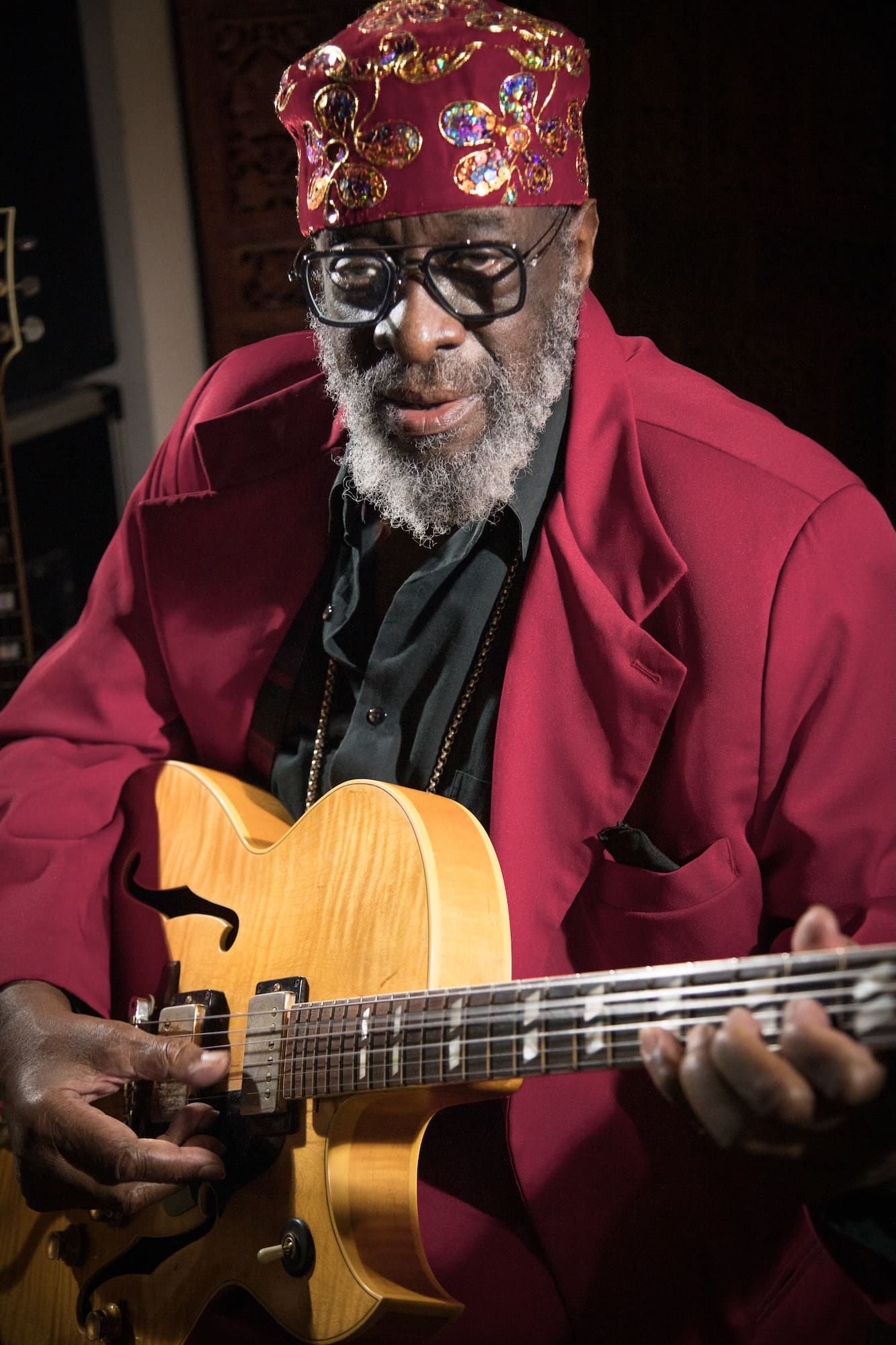
“This one is tuned regular,” he said, reaching for his black 1954 Gibson Byrdland Custom (strung with medium-gauge flat-wound strings) and began firing off a series of rapid, splintered riffs and fractured phrases.
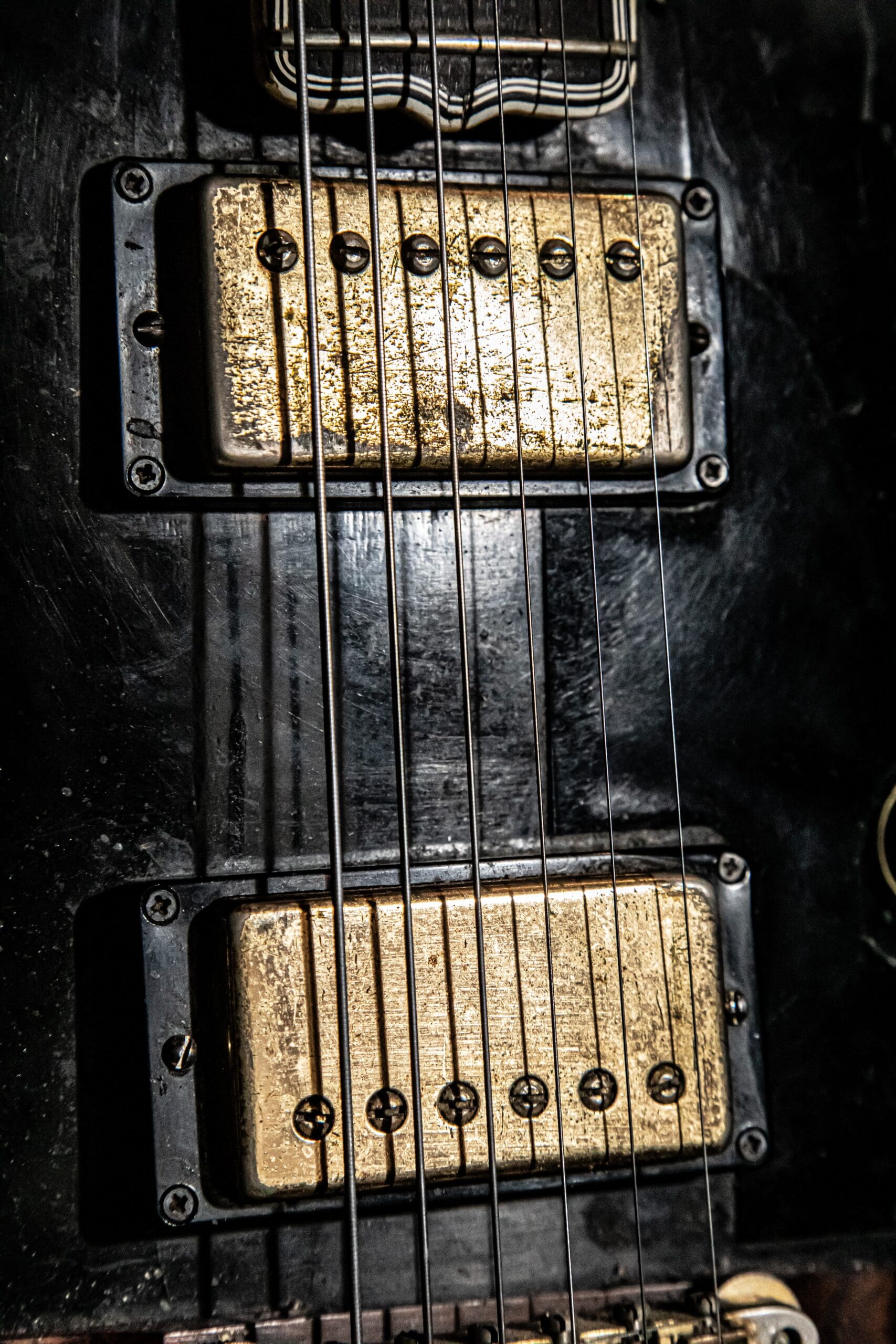
Blood plays hard and his instruments bear the beating they’ve taken over the years. On the cover of Ulmer’s 1981 breakthrough album Free Lancing, he’s seen playing a big beautiful blonde Gibson Byrdland. But after years of wear and tear from constant gigging, he had it painted black to cover the visible signs of distress.
“About eight or nine years ago, my wife bought me this guitar,” he says picking up his “new” 1962 blonde Gibson. “They’re both the same, but tuned differently,” he stressed, brushing the strings with his thumb. “This one is tuned harmolodic [and strung with medium-gauge wound strings].”
Over the years, Ulmer has employed various tunings, with both a low E or A as the root note. The A tuning, which this guitar was in, was tuned (from high to low): E A E A A A. Blood can be seen explaining the intricacies of “The Unwritten Theory of Guitar Harmolodics” on a YouTube clip where he also tunes his guitar in E (from high to low): E B E B E E.
The blonde Byrdland also boasts a big, brassy Bigsby tailpiece. “I never use that thing! Whadda ya call it?” he asked with a husky chuckle. “A whammy, a tremolo or a twang bar,” I replied. “Never use it. I don’t even know how you do it…it’s just there.”
“So, the tunings provide a couple of languages or set of directions to start from,” I reply, trying to break down Ulmer’s rootsy yet abstract theory. Blood laughs at my attempted analysis.
“Yeah, I hear you, but I don’t think about it like that. I just wanna make it through the night!” he said. “Y’know, it’s a fight to play the real American music, ’cause most people in America are playing European music. I don’t care what you’re playing. It all comes from the keyboard, from Europe. That’s what they respect. In America, our families all came from somewhere else. But this country has its own music without going to Africa or anywhere… And it’s guitar music! Not keyboard music. The Africans got their own tribal music and their own way of playing.”
Blood’s comment suddenly triggers something a Nigerian guitarist named Idowu Awe once told me back in 1978. He strode into my February-cold Berlin pad like he owned the place and laid his guitar case on the kitchen table. Pulling up a chair, he sat down, set his guitar on his lap and began tuning his guitar, starting with the low E string, which he loosened until it was slack. Then he began tightening it back up again. I wasn’t sure if he knew what he was doing or if he was messing with me. So I just sat there watching as he tuned his strings in what seemed to be a totally random fashion. While the E string was tuned to the lowest pitch, the rest of the notes didn’t follow any logical or conventional order.
“I tune to my head!” Idowu said, smiling. “That way, every time I play the guitar, it is fresh and new.” After finally settling on his latest tuning, Idowu began to chop a syncopated rhythm that I could find neither the top nor the bottom of. Once I tossed out any rational, Western approach to music, I picked up my mandolin and just fell into the groove, intuitively playing along. We wound up jamming happily for the next couple of hours.
“Music is not an instrument!” Blood emphasized. “It’s much bigger than that. You gotta figure out what it is. But you also gotta figure out what it ain’t. Don’t look down—look up! Look forward and get all the obstacles out of the way,” Ulmer said. “People want to hear music. They need music! But they don’t really know what it is. It’s not about a flat four or a flat nine!” he said with a laugh.
As Ornette Coleman often pointed out to his fellow musicians, “That’s not just a saxophone you’re playing—that’s music! That’s not a guitar! That’s music you’re playing!”
Blood also designed (and copyrighted) a chart of the harmolodic clef, which illustrates how the theory works. “He wrote it all down. It shows how each note relates in harmolodic law. I will find it for you,” Blood’s wife, Eva, said, returning a moment later with what looked like a cryptic treasure map comprising three intersecting angles with notes written on both sides, indicating how they interrelate with each other.
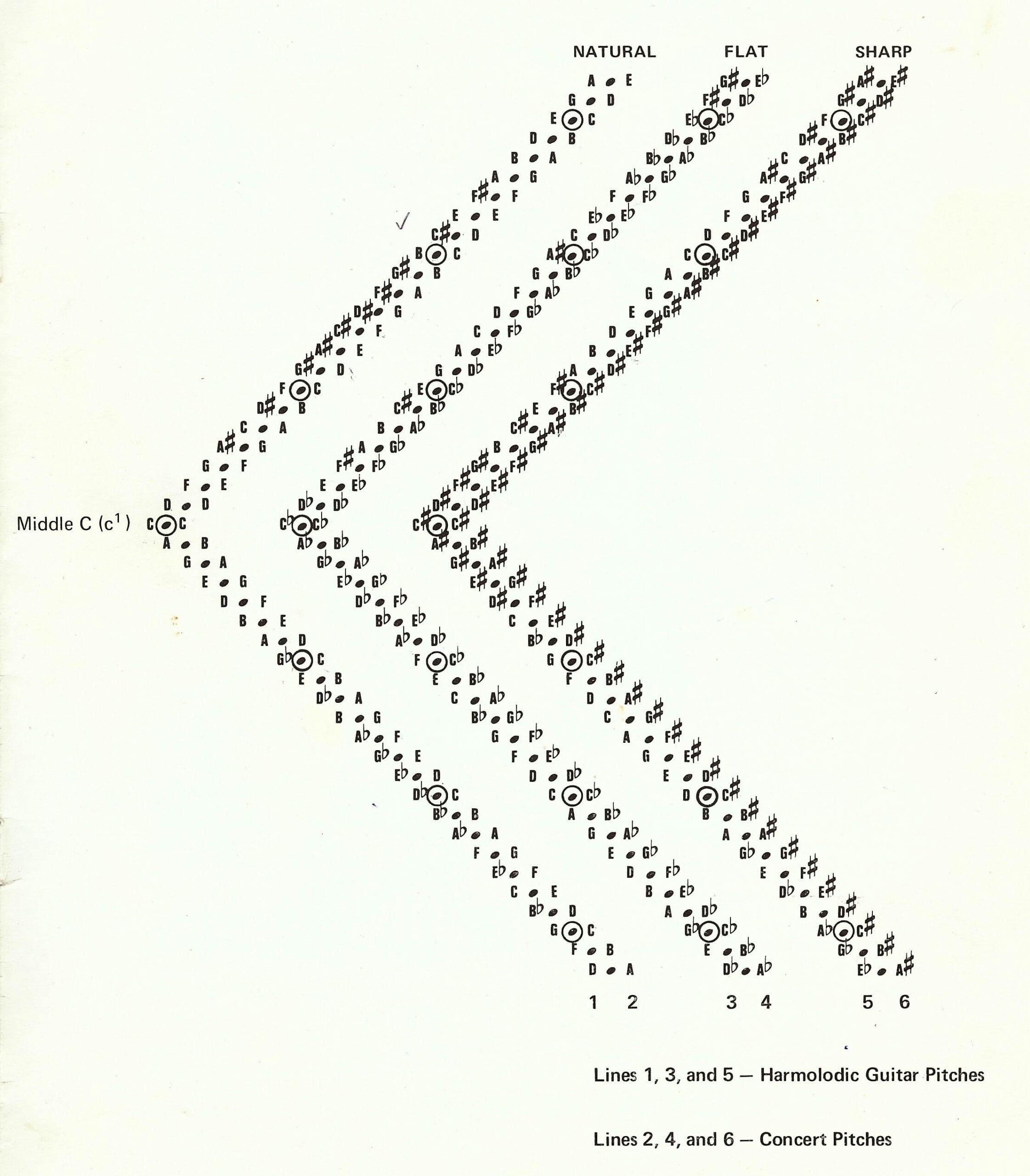
“That’s just harmolodic theory,” Blood said, shrugging. “You need to hear the sound. Music is a language. It’s information. Different people make different music. I’m different from you! So, why would my music sound anything like yours? [laughs] The instrument might help to break it down, but that ain’t music. If you can find it, then you can play it!
“You’ve got to remember, the instrument did not come first,” Blood emphasized. “That tells you something right there. Music came before instruments. People made instruments, but music was here before the instruments! Y’see, that’s the problem. You can play the instrument, but that don’t mean you’ll find the music.”
Ulmer’s unique system of tuning helped him to blow open doors of new possibility, inspiring him to stretch beyond the well-worn cliches and the pitfalls of patterns employed by most blues, jazz and rock guitarists. Blood’s harmolodic approach to playing gave him an incredible range of expression and the unique ability to construct harmonies as no other guitar player has, before or since. But what about the music he first learned to sing and play: gospel?
“Now gospel is something that don’t always come into you but comes out of you. They always want to teach you something to put it in your brain, without givin’ a damn about what was in your brain before.”
Speaking of shuffling the deck of your mind, Bill Frisell recalled seeing James Blood Ulmer play for the first time in Ornette Coleman’s group at the 1978 North Sea Jazz Festival. “It was wild…psychedelic…mind altering,” he enthused. A few months later Frisell caught Blood playing the small [now defunct Manhattan jazz club] Sweet Basil with saxophonist David Murray, and again with Arthur Blythe. “Any chance I could get,” he said. “With [his band] Odyssey, or solo. I love Blood. He changed the way I think and inspires me every time I hear him. He showed me a whole ’nother world. The past and the future. Deep, deep down into the earth and way, way far out into outer space at the same time. He is for sure one of the true one and onlys.”
Experiencing James Blood Ulmer live in New York punk clubs in the early ’80s was an intense and unforgettable experience. Onstage, the natty electric griot projected an imposing presence The music was loud and aggressive. Notes chimed and jabbed, blurted and shrieked from his amp (either a Roland Jazz Chorus 120 or Fender Twin Reverb), casting a spell over the crowd. For young, adventurous punk rockers exhilarated by Captain Beefheart’s fractured grunge and John Lydon’s edgy Public Image, Ulmer’s music connected all the dots, from Delta blues to free jazz to punk.
While Ulmer respected tradition, he had no use for convention. “My music came from a different direction,” Blood explained. “I call it modulating funk. We were the first black band [drummers Shannon Jackson and Calvin Weston, bassist Amin Ali, David Murray on sax and trumpeter Olu Dara] playing that kind of music at Hurrah and Danceteria. That shit was happening! But you don’t have those kind of gigs anymore.”
For better or worse, Blood was crowned the “New Hendrix” by a pair of reputable critics—the New York Times’Robert Palmer and Robert Christgau of the Village Voice, who appreciated his “catchy themes” and deemed Ulmer’s playing “the densest guitar improvisations anyone has put on record since Hendrix.”
Along with Robert Fripp and Adrian Belew’s innovative playing on King Crimson’s Discipline (released September 22, 1981), Ulmer was one of the few guitarists to extend the vocabulary of the guitar beyond Hendrix’s lexicon of sonic inventions.
It’s difficult for most folks to grasp harmolodics. It’s chaotic and revolutionary stuff. Metaphorically speaking, it’s like standing under a waterfall, a kinetic shower of notes and rhythms. If your brain doesn’t freeze in the headlights of analysis, you’ll be transported to another realm by the sound rushing over you as it scours your ears, mind and soul.
“People like art they understand,” the great American modernist composer Charles Ives once said. After an audience booed experimental pianist Henry Cowell [whose unique tonal clusters inspired Hungarian composer Béla Bartók], Ives allegedly leapt to his feet and shouted, “Shame on you! Sissy ears! Learn how to listen to real music!”
So, how does Ulmer feel about those folks that don’t get what he’s putting down? “I don’t give a shit,” he laughs. “I’d tell ’em to shut up and get out if they don’t like it!”
While Blood performed in various New York jazz clubs, it was the burgeoning downtown experimental No Wave scene that initially embraced his sonic onslaught. “I never did one thing at a time,” he explained. “I’d play one way and then another and another. I can get a blues gig, but…” Ulmer cracks up laughing at the notion of playing for the House of Blues crowd of musical tourists wanting to boogie and chow down on hand-crafted beer and high-rent plates of ribs.
“Look at the computer and you see some young fat kid singing old-time blues and people think that’s where it’s at!” Blood cackles with laughter. “That’s blues? Talk about the rise and fall of America’s music! What is music in America?” Blood asked rhetorically. “The only thing I can call it is prayer. That’s the music you take to the stage with you and play. That’s the music people will sit and listen to and like. But that’s the same damn reason you’ve got to take the music somewhere and change it. But if you make too many changes, it can’t exist. Nobody [record companies, radio or the media] will make room for it. I don’t hear no horn players that can play like John Coltrane anymore. John Coltrane was prayin’ so hard with that saxophone…but nobody will talk about that. A whole lotta horn players trying to play like Coleman or Coltrane, trying to sound like someone else they heard, thinking maybe they’ll make some money.”
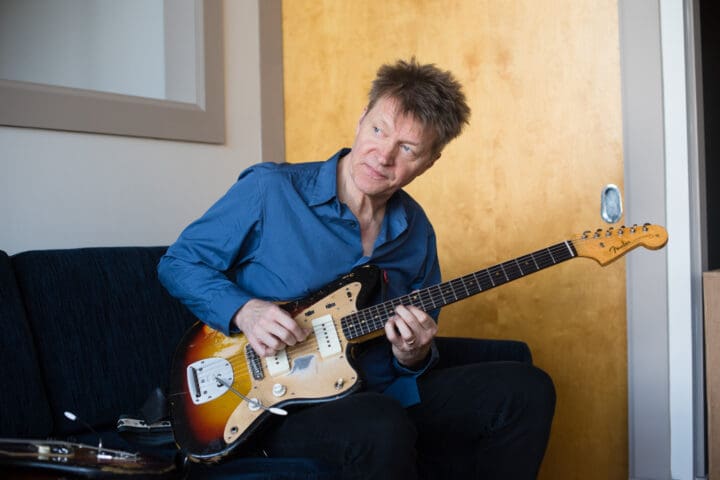
“Absolutely no one sounds like Blood Ulmer on guitar, and I think we all know how near miraculous that is, especially in these times of tutorial homogeneity,” exclaimed Nels Cline (guitarist with Wilco and Plastic Ono Band). “But I must add that no one sings like Blood Ulmer either! Listening to him sing and play is like hearing an electrifying merging of past, present and future musics; front porch story songs, spiky iconoclastic improvisation, a whole other kind of blues.”
In 2001, Ulmer embarked on a series of blues-based albums produced by Living Colour’s Vernon Reid. Memphis Blood (recorded at Sun Studios) and No Escape from the Blues (recorded at Electric Ladyland) offered Ulmer’s reworking of Son House’s classic “Death Letter Blues,” and Willie Dixon and Lightnin’ Hopkins numbers like “Spoonful,” “Little Red Rooster” and “Trouble in Mind” (which featured this author on a droning tanpura).
Was it an attempt to simplify his music by playing something people were more familiar with, and not forcing them to think or listen too hard to understand and appreciate?
“I don’t play blues to get recognized. Blues is about language. It’s not about being a guitar player or a saxophone player,” Ulmer emphasized. “It’s scripture! Now, I don’t mean that it reads like or comes from the Bible. It’s a language that was taught to man. But I ain’t got no proof!” he said with a raspy laugh. “But I don’t like to talk about [that] because it don’t make sense.”
Speaking of not making sense, after two cutting-edge albums for Columbia in the early ’80s, the powers that be suggested Blood cover a Bruce Springsteen song in hopes of reaching a larger audience. Hare-brained as this scheme sounds, Ulmer’s cover of Neil Young’s “F*!#in’ Up” which he performed at Hal Willner’s Neil Young Project for the 2010 Vancouver Olympics, was smokin’ hot and heavy as a steamroller on a July afternoon. Ulmer’s ferocious version was in part enhanced by employing a Steinberger guitar.
“I don’t like it. It’s too cold,” he groused. “If you weren’t playing one of them, you didn’t have an avant-garde gig back then. The Gibson is more like a woman. But that guitar—well, it’s easy to travel with,” Ulmer allowed, referring to the Steinberger’s trademark missing headstock. Then he chuckled and recalled an odd moment in Vancouver when Lou Reed showed up with a Steinberger over his shoulder and saw Blood playing one as well. “He went and got something else!”
Back to the Columbia debacle: After Ulmer handed in his third album, Odyssey, the label unceremoniously dropped him. “They wanted a hit, but I don’t play no E, A minor, B major kind of thing. They wanted some Springsteen, and I gave ’em an album with no bass player!” Blood said, laughing. Odyssey, the album and the trio named after it, featured Ulmer’s choppy, rhythmic guitar riffs contrasted by Charlie Burnham’s languid, gooey, wah-wah-laced electric violin and propelled by Warren Benbow’s muscular polyrhythmic drums. (If you need a reference point, think a black, rootsy version of John McLaughlin’s Mahavishnu Orchestra—but make sure to listen to the album!) But here’s the twist—Ulmer, who has a deep, soulful, bluesy voice, delivered a funky, foot-stomping rendition of his trademark song that asked the question “Are You Glad To Be in America?” three years before Springsteen’s smash “Born in the USA” in 1986. (Ulmer had previously recorded the song and titled his 1980 Rough Trade release after it.)
As Blood pointed out, there was no bassist on the session, as his detuned low strings covered the bottom end most effectively. In keeping with the freedom principle essential to the harmolodic creed, each instrument retains an equal voice and presence. The rhythm section is no longer forced to sit in the back of the musical bus, designated to serve the “lead instruments,” and are free to play and interpret the music as they feel.
More startling collaborations followed with Ulmer’s bands, Music Revelation Ensemble and Phalanx. ButBlood’s most unusual project came in 1993 with Harmolodic Guitar with Strings, which featured Ulmer’s voice and guitar a string quartet comprising violinist John Blake, Akua Dixon on cello with violinist sister Gayle Dixon, and Ron Lawrence on viola. Ulmer’s yearning, bleating vocals on “Maya,” buoyed by the transcendental strings, sounds like a lost song from Porgy and Bess.
“That was a wonderful session,” said Akua Dixon of Quartette Indigo. “My sister Gayle and I and John [Blake] had worked together before on sessions with [saxophonist] Archie Shepp and Ornette [Coleman] when he premiered a new piece at the Harlem Philharmonic. When you work with some people it’s about rehearsal, then hit the gig, and you don’t really absorb that much about the person and their music—and sometimes you’re glad you didn’t!” Akua laughed. “But in the case of Blood’s music, that was the only way you get to play it. It’s not about just what he wrote on the paper. Blood was very specific and unique. He didn’t write tunes, he wrote compositions. That whole album was a composition. It’s not a tune here and there. There are tunes within it and things you can take and make into a tune. It was all notated music, written by him. But it was written to a certain point, like a guide. It wasn’t like European music, with exact numbers of measures. But I understand it, because to keep the music growing, as a science, the system of notation that’s allotted in European classical music is no longer enough. Even on Charlie Parker with Strings, those were union musicians who got paid well, and were hired by the record companies for the gig. But they sure didn’t swing!” she emphasized. “But Blood? He is totally unique. His music is about moving on.”
As a composer, Blood translates the music playing in his head in various ways. Although he rarely plays flute live or on recordings, he uses the instrument for composing. On an earlier visit to his Soho loft, Ulmer sat on the couch, the sound off on his television, playing breathy melodies, silvery and blue. “I can write and read music faster on the flute than I can with the guitar,” he explained. “I don’t like to read music,” he grumbled. “I play music! I’ll read for hire! It’s hard to read someone else’s music. It’s just there to help you remember.”
So how has the 82-year-old iconoclast of harmolodic music fared during the dark days of the pandemic, holed up in his downtown loft?
“I mostly play in Europe now. They sat two here, two here…” Blood said, referring to the solo gigs he recently played in Holland, despite the threat of COVID, and by the time you read this, his band, Odyssey, will have returned to play Detroit for another epic harmolodic hoedown.
This article originally appeared in the Fretboard Journal 50, now sold out. Subscribe today and never miss out on a future issue.