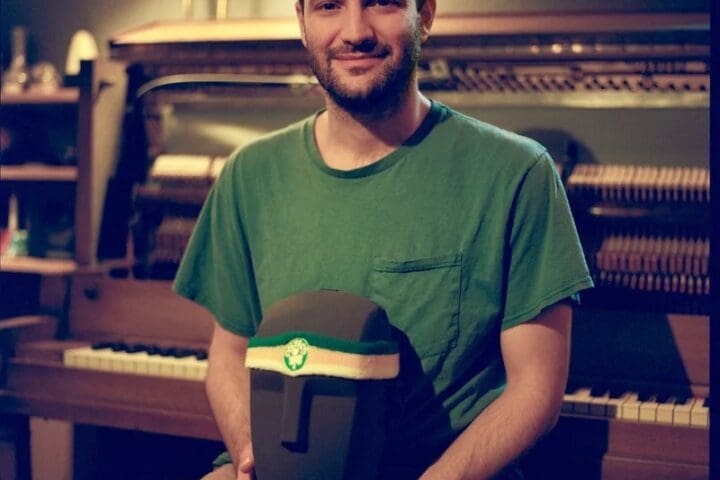
[Editor’s note: This Tucker Zimmerman interview conducted by Jamie Etherington was slated for the Fretboard Journal’s print edition. With the artist’s passing on January 17, 2026, we’ve decided to share it in its entirety online. It is probably one of the last interviews the self-proclaimed “song poet” did, and we hope it sheds light on his profound music and influence.]
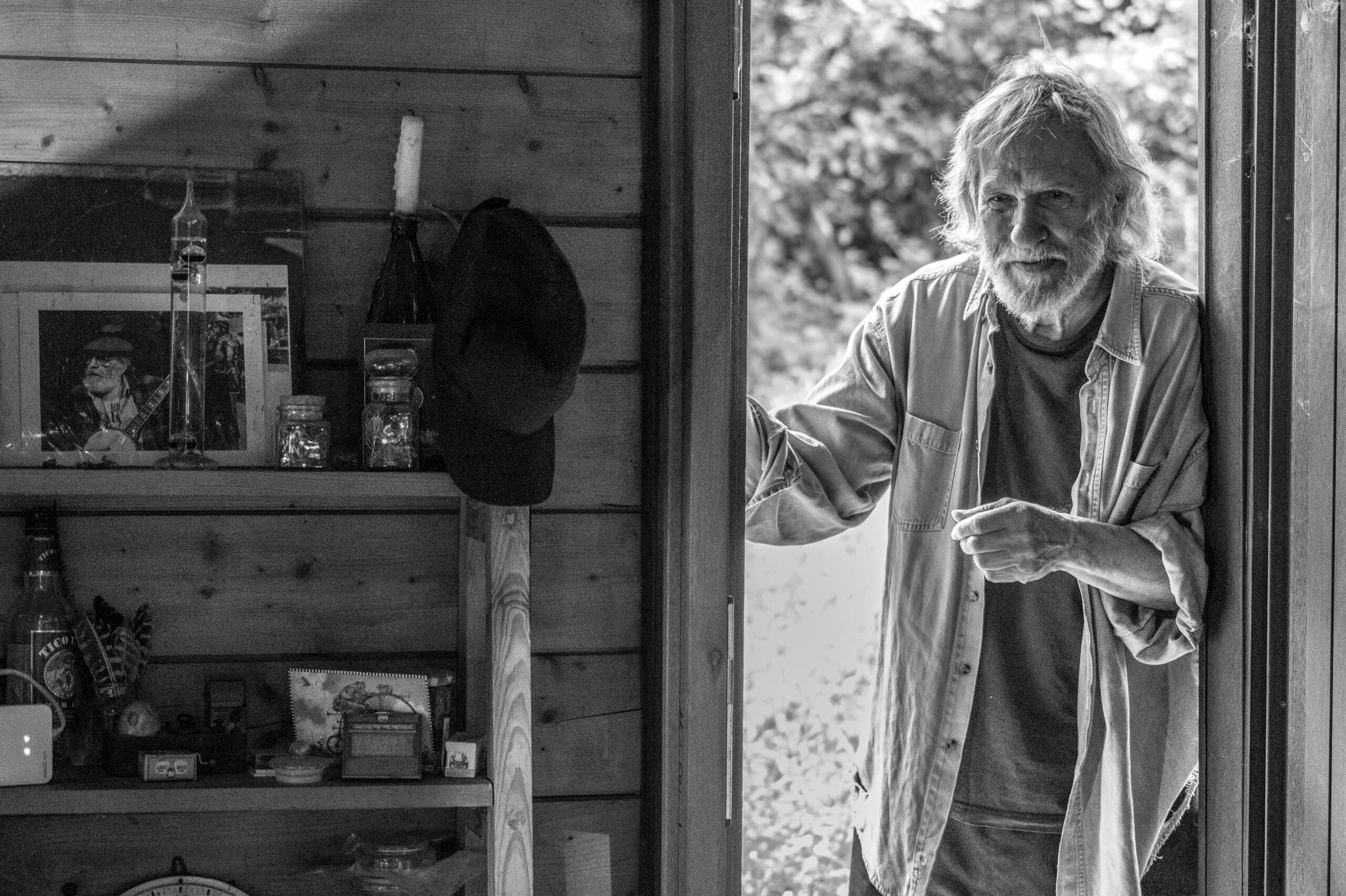
Photographs by Dirk Leunis
If Tucker Zimmerman is an unfamiliar name to many readers, that should come as no surprise. As West Coast musician Zach Burba tells me, Tucker’s music has until recently gone largely unnoticed. “People may be inclined to call this a crime, ‘how could we miss out on such vital music!’ but I know that this was by design,” he says. “Tucker had many chances to grab a career in the spotlight and he just listened to something in his gut that said, ‘maybe not this time.’”
Over seven decades, Zimmerman has released a dozen albums–a sonic memoir incorporating folk, 12-bar blues, full-band rock concertos, and classical piano compositions. Born in California in 1941, he graduated with an MA from San Francisco State College at the height of the Beat era. In the summer of 1966, he had just received his draft papers when he was awarded a Fulbright scholarship to study musical composition in Italy. During his two years in Rome, Tucker emerged as a fixture on the Roman folk scene, playing the clubs in Trastevere. It was in the Eternal City that he also met his future wife, Marie Claire.
In 1968, the couple moved to London where Tucker befriended a young Tony Visconti, at the time an apprentice producer learning his trade at the Regal Zonophone studios. This friendship lead to Visconti producing Zimmerman’s debut album, “Ten Songs.” In the early ‘70s, Tucker and Marie Claire crossed back over the Channel, setting up home in her home country of Belgium. Thereafter, Tucker spent the following decades quietly working the European festival circuit, biking around the Belgian countryside, raising their son, Quanah, and all the while writing and recording.
His most recent record, Dance of Love, on which he collaborated with Big Thief, has finally garnered the 84-year-old Zimmerman some wider later-life attention. Zach Burba, who also played on the album, recalls the first time he heard Tucker’s music.
Zach Burba: Adrianne [Lenker] played me “Foot Tap” one evening when we were hanging and sharing songs in James Krivchenia’s old downstairs garden apartment, in a now burnt-down Altadena home. I was taken by Tucker’s liberal use of phaser pedal on his lo-fi country songs. After a few songs I readjusted my focus to the lyrics and was smitten with the playful surrealism and humble gentleness of the poetry.
Earlier this year, I caught up with Tucker via Zoom from his home deep in the Belgian countryside to chat about his journey from San Francisco to Belgium, explore his creative process, talk about guitars, and the making of Dance of Love. My first question, however–reflecting the geographer in me, was wanting to know where in Belgium Tucker and Marie Claire call home.
Tucker Zimmerman: We’re in Stockay Saint-Georges, which is on the plateau above the Meuse river. We came here in 1978. It’s a farming community: Potatoes, beetroots and corn. We’re 20 kilometres from Liège, in a small valley that leads down to the Meuse. My studio is just down the hill from the house.
I mention to Tucker Zach’s observation that his relative obscurity is by design and that it reminds me of something Michael Hurley said about his own low profile, “Calling me an outsider artist? Yes, I think that’s apt. It’s taken me a long time to join the gang.” I wondered to what degree that sentiment resonates with him?
TZ: Well, I only had one brush with this–going one way or the other. It was in England in the late ‘60s and I was surrounded by the pop music world at that time. I made my first record and there were gigs, but things weren’t happening. The government wouldn’t give me a work permit, so I couldn’t do gigs legally. I did them, but under fake names. There was no way of getting to where I wanted to go. But, at the same time, I saw around me what happens to people who desire fame and fortune. And I said, I don’t want to do that. The British government kicked me out of England as I wasn’t making any money. In a way, it was fortuitous. They kicked us out and that put me into the world I wanted to be in. I started doing gigs in Belgium and Northern Europe and decided I’m going to stay here and keep going, because it was too good!
Belgium has been very receptive to me. I came at a good time because this was the late ‘60s, Woodstock had happened and they were looking for some sort of Woodstock scene! My first gig after being in the country for only a couple weeks was at a big event in Brussels. I entered a room that held about 700 people, it was packed. There were so many people on the stage, I had to wade through bodies to get to the microphone. That began something positive for me. I started to become known. It all stemmed from the movement created by Woodstock and this desire to join in internationally with the spirit that was happening in America. So, they chose their American! At the same time, I started touring West Germany and I took in every corner of that country too.
I remark that his early career appears to have been a perfect trifecta of timing, location and talent.
TZ: It always is, isn’t it? You run into things and you just happen to be there. My life has been like that all along. These coincidences which have been beneficial for me. I arrive in a place and it works out, you know. In Germany, the mood was a little bit different than Belgium. The students were still reeling from World War II and what had happened politically in Germany. They were saying we’re going to make sure this doesn’t happen again and, in the early ‘70s, they were supporting anything positive that came along. I was a cultural outlaw for them and they supported that very strongly. I had that good run of 15 years with Germany as well. It was great and I was working all the time. I remember one year in the mid-‘70s, I did over 250 gigs!
I had great audiences all through the ‘70s, until the students got older, started having families and children and then I lost my audience. This happened at the same time as MTV came along in 1984. That ruined everything! However, it was a fortuitous moment too as it brought me into other things and took me into another world.
The Dead, Miles, and Moondog
I wanted to hear about Tucker’s student days in San Francisco. His song “Old Hippies Lament,” namechecks Wavy Gravy and Ken Kesey. I wondered if his immersion in the late ‘50s counterculture had influenced him creatively.
TZ: The thing is, I was part of that movement. I grew up in my teen years, 10 years up through high school, in the country on a ranch. But I came back in 1958 to go to college in San Francisco, and I plunged immediately into the Beat era. That movement influenced me the most. The writing of Kerouac, Ferlinghetti, and Ginsberg got me going.
Tucker says that in ’64–’65 he lived on Downey Street in Haight-Ashbury.
TZ: [It] was the cheapest rent in the city! You could get a flat or apartment for $60 a month. That’s why I went there, because it was cheap! Garcia and the Grateful Dead were living one block over. The Dead were playing almost every weekend at the Avalon. I didn’t miss a set.
Within the Dead camp, Tucker found common ground with Phil Lesh.
TZ: I was studying musical theory and composition in San Francisco and he was across the bay at Mills College. He was also a student composer and we met at concerts of our music. That’s how I got to know him. We shared this idea of being student composers. I knew him as a trumpet player and he was pretty good. I heard his compositions, he heard mine and we exchanged ideas. We never became close friends but I knew him.
In late ’65, however, he says the demographic of Haight-Ashbury changed.
TZ: We had a nice community up until the invasion started happening. People, kids…started moving in. They heard the news, you know, and paradise was gone.
This period was also the golden era of West Coast jazz. The San Francisco scene in particular was a vibrant one, cantered around venues such as the Blackhawk and Bop City. Tucker recounts one of those “I was there” moments, disclosing that he was at the Blackhawk in 1958 when Miles Davis and John Coltrane were rehearsing the running order for Kind of Blue.
TZ: It was an incredible moment in my life. I’ll never forget it. It was a small club with little round tables where you’re supposed to hold your drinks, and I was right in front of Miles Davis. He was looking right at me when he was playing, Coltrane was off to my left, and Adderley was off to my right. That was pretty much the unit. It was overpowering in a way, because these guys played, I mean, really played. I attended all three performances. I think Miles got tired of looking at me one point. He turned his back on me and played in the other direction. He was a funny guy, in a way, because I think maybe he didn’t like white people. With good reason. I understood it.
Tucker also sought out John Lewis, who led the Modern Jazz Quartet.
TZ: I met him several times on purpose as an invitation to sit and talk about music. And he was interested that I was composing. I knew when the MJQ was coming to the Blackhawk and we’d set up a meeting at his hotel, which was right next door. We’d spend an hour in the afternoon, before the gig, talking about composition. He would analyze what he thought about Bartok, for instance. He had great musical knowledge, which went way beyond jazz. I considered them lessons. He talked, I listened and I absorbed. I wasn’t going to butt in because it was too interesting.
As for Tucker’s other musical influences, I had heard that Moondog and Leadbelly were important figures for him.
TZ: Well, those recordings, of course. I actually met Moondog later on in Germany in the ‘80s but that’s another story. I ran into some recordings of their music. Leadbelly and Moondog are quite different, but both touched me deeply.
Tucker says that listening to “On the Streets of New York” and “Snaketime Rhythms” as a 10-year-old gave him his first idea of someone being a composer.
TZ: Oh, people can do that? They can construct things and play them, make them perform them. That was cool. With Leadbelly, it was more abstract in the sense that I loved his voice and the sound of the 12-string guitar. I said to myself, someday, maybe I’ll play music like this and if I do, I’ll have to have a 12-string. And that’s exactly what happened. I still only play the 12-string.
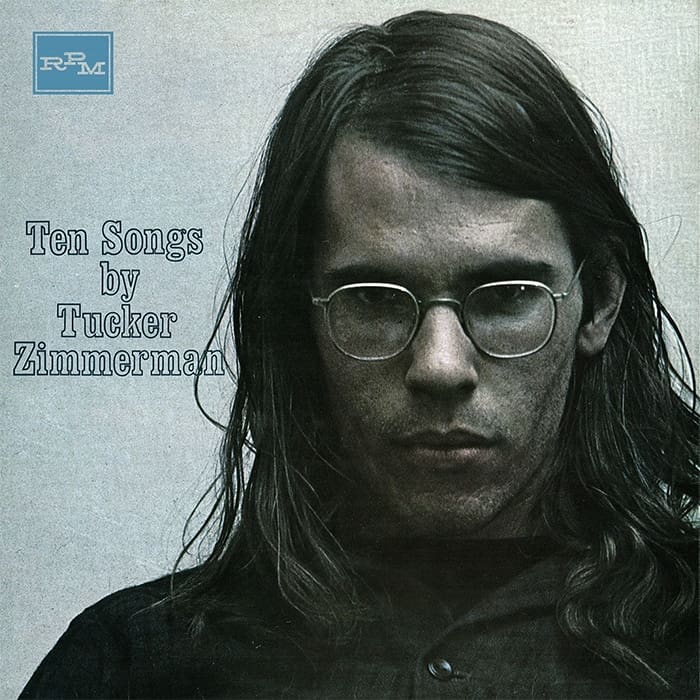
Ten Songs
We then talk about Tucker’s time in England. I was intrigued how he met and befriended the legendary producer, Tony Visconti.
TZ: I didn’t have a work permit, only a three-month visa. I said, well, I’m going to try to find gigs anyway. I went around to several clubs, including Les Cousins in Soho. The guy heard me play and said, ‘I’d love to take you on, but do you have a work permit?’ In the same room was this young guy, Nick Jones, who was a sort of hanger-on but in a nice way. He was the son of Max Jones, the jazz editor of Melody Maker. Nick came up to me and said, “I like what you’re doing. It’s a shame you can’t get anything going.” Nick knew everyone on the scene at the time, partly through his father and the magazine. One of them was Tony Visconti. He said, “I want you to meet this guy, you might get along” and he took me over to the demo studios at Regal Zonophone.
Tony had only been in England a few weeks. He’d been brought over by Denny Cordell. Tony was getting started. He’d done some arranging and a little bit of production. We clicked personally and immediately became friends. Over the next couple weeks, he heard more of my music and wanted to record it. Denny had gone to America and left Tony in charge of the place. Tony said, “Listen, I’m not going to talk to Denny; we’re going to go in the studio and record.” Of course, when Denny came back, he was pissed off, “You shouldn’t have done that. I don’t want this artist.” Tony says, “Well, I do” and that began a more solid foundation between Tony and me. He stood up for me and found gigs for me under a fake name. We were actually talking about doing a duet together at one point and played a couple gigs as Tony & Tucker. We’ve remained friends ever since.
The Song-Poet
Tucker vehemently resists the label “singer-songwriter,” preferring the epithet “song poet.”
TZ: Somebody gave me that tag way back before I was touring Germany in the early ‘70s. I accepted it. It sounded right, and I never paid much attention to it. I’m glad it happened because these days it seems everybody is a singer-songwriter. I know they haven’t put in 50 years of work to be where they are, and I don’t know how much more they would do. They’re so young, some of them, and I know most of them will drop out. I don’t have any respect for that tag “singer-songwriter.” I’m glad I have this “song poet” thing to fall back on.
We then exchanged thoughts about the modern curse of pigeonholing musicians by label or genre, which prompted an impassioned response from Tucker.
TZ: Well, that’s good as I don’t want to be a pigeon! I don’t like to be pigeon-holed and I’ll resist it. When people say, “Oh, well, you know, that sounds a lot like Townes van Zandt,” I’ll say I don’t want to talk to you. I don’t want to know because you’re already letting the pigeons crap on you!
I ask Tucker about the intense periods of writing he refers to as “river runs”–what prompts them and how he engages with them on the creative plane.
TZ: I had a big run on poetry in the first 10 years of this century, and there’s been moments when I’ve had periods of intense writing, but they come unexpectedly. I’ve no control over that. It’s sudden, I have to do it, and if I didn’t, I’d get in trouble with myself. If you don’t follow these things, it’ll block up and cause all kinds of problems. But that’s not actually the reason. The reason is that it feels so good to do it. There was one period in the ‘90s somewhere, I wrote 80 songs in a week. That seldom happens. I was running between my writing desk and my Pro Tools, and I’d write the lyrics, run over and make up the song.
Tucker volunteers that the day before, he had been looking over the lyrics for his new record.
TZ: Nick Holton at Big Potato proposed another album and we’re finishing that one right now. It’s called “Dream Me a Dream.” We recorded it here in my studio. Nick came with his recording material, even though I have Pro Tools. He said, ‘Let’s leave that aside. You don’t have to worry about doing that. You just concentrate.’ We sat on the other side of the studio at my writing desk, I had the guitar and let the songs come out. 11 or 12 of them, most new and a couple of old ones.
“I Consider Myself a Drummer More Than a Guitarist”
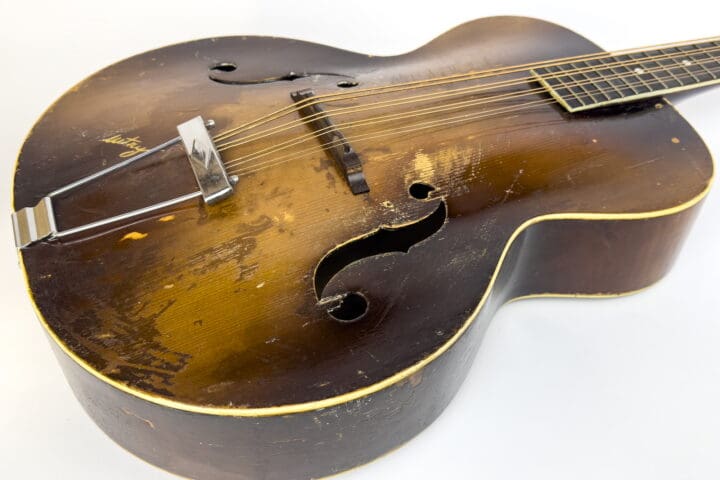
This being a FJ interview, I naturally wanted to ask Tucker about the 12-strings he has owned, in particular the ones made by Tony Zematis and Božo Podunavac. I had been forewarned, however, that Tucker is somewhat reluctant to indulge the nitty-gritty of guitar nerdom.
TZ: I’ve been surrounded by people in the ‘70s and, even still today, who want to talk about guitars and strings! I’m not interested. I’m not a guitar player. I use the guitar. I consider myself a drummer more than a guitarist, because I play a drum that has nice sounds…chords. That’s how I treat it. I don’t change the strings on my guitar for two, three or four years. I think the strings have been on there for five years right now! I don’t change them, it’s too much trouble. I know a little bit about guitars, of course, because I’ve looked around for good 12-strings. I’m always open for a new 12-string!
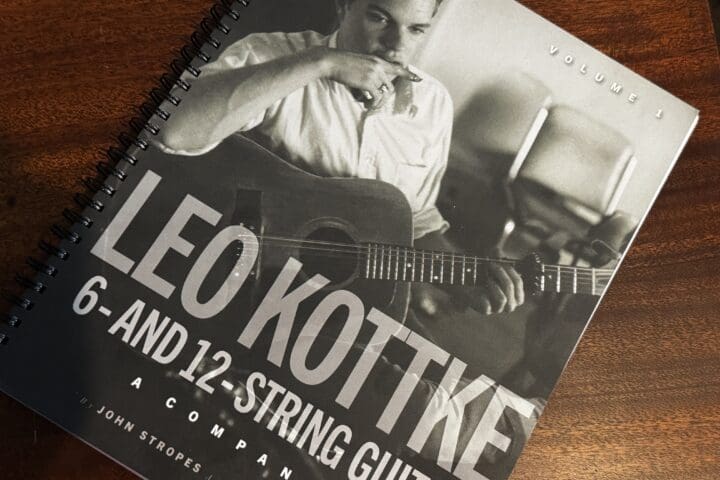
I played the Zematis for a few months, then found too many faults in it. It was not a good guitar. Then, a friend in Holland found a Božo for me, and all I knew was that Leo Kottke played one. I love the sound of it on his recordings. My friend called up and said there’s a Božo in Utrecht, you’d better come up and look. And it was cheap, 1600 guilders. It was a good guitar, so I got it and used that for a long time.
Music by River, Words by Ear
Before wrapping up, I wanted to ask Tucker about the origins of “River Barge,” a melancholic, haunting track that conjures images of fog-bound marshlands and a sullen northern European river.
TZ: Well, I wrote it in Maastricht, which is on the Meuse. I’d been bicycling with an American friend, a sculptor who I’ve known for over 50 years. Another artist in my life! He was setting up an outdoor exhibit sculpture. I had been working on this poem all day long, looking at the river and thinking about the barges going by. I thought, would I like to live on one for a while to see what it was like? In my head, I was composing all these verses about the river barge. We finished the exhibit, went bicycling and ended up at a cafe above Maastricht eating potato soup. I had written about 16 verses, which I read to John. He listened and said “there’s too much river barge.” That night I got home, picked up my guitar, and reduced the 16 verses down to three. John pushed me into reforming the poem and I made it into a song. I still play it with my trio.”
I mention that it’s a personal favorite, lyrically and musically, and his response is entirely in keeping with what Zach had told me about Tucker’s ability to speak directly to the best and most engaged version of whoever he is talking to.
TZ: Thank you for the compliment. I’m glad because it reaches out and touches you. That’s why I write. It’s important we keep in contact with everybody. When I sing for people, that’s the initial point. If we lose that, we’re gone. The person sitting next to you is a friend that you don’t know yet. I cannot be with a person and ignore them. Even waiting at a stoplight, across the street there’s somebody next to me. I say, how you doing, in French or whatever. Maybe not much comes of it in terms of words, but they know that I know them. I recognize them as another human being. An example is you asking for an interview. Of course, I will. There’s no doubt in my mind that we’re going to sit and talk.This was good. I appreciate you being there. I have to find Marie Claire with the oatmeal!