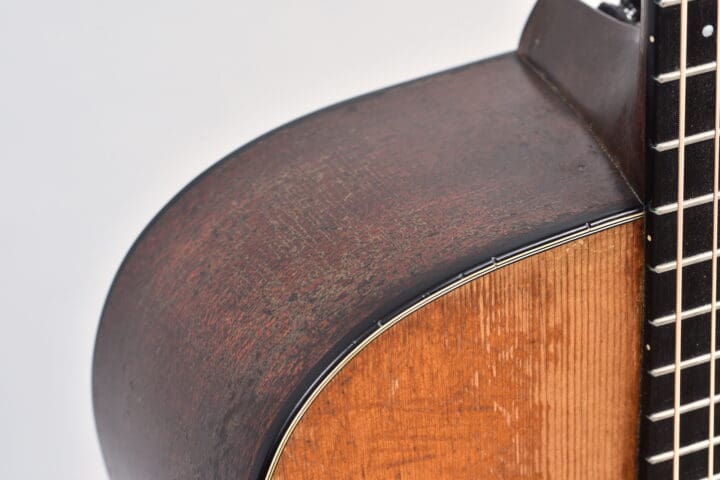
A short excerpt from Clay Frohman’s cover story on Joni Mitchell’s Greenpeace guitar in our 57th issue.
On a bright sticky Saturday in early May 1995, I was sitting with friends near the front of the main performance stage at the New Orleans Jazz and Heritage Festival. We were waiting for Joni Mitchell to come on. She was headlining the closing weekend, a coveted slot, but freighted with even more anticipation than usual because (a) Joni hadn’t toured since 1983, more than a decade ago, due in part to the impracticality of adjusting her many tunings between songs or carrying enough guitars and techs to handle it all, and (b) word had circulated that today’s show might be her swan song, a final public performance before she called it quits on the “star making machinery” of the music business, toward which she had for years harbored a simmering antipathy.
Thousands of music fans and Joni fanatics filled the sprawling lawn behind me. Joni’s career spanned many eras, genres and styles and they were all reflected in the mix of folkies from the “Circle Game” and “Both Sides Now” early years, reverent intimates from the probing confessional “Blue” and “For the Roses” period, pop fans from Joni’s commercial breakthrough “Court and Spark” and beyond. As her thirst for new sounds evolved from the solo folk guitar and dulcimer of “Song to a Seagull” and “Clouds” into more complex and rhythmic band arrangements, Joni sought out schooled jazz musicians like Jaco Pastorius, Wayne Shorter and Tom Scott who could work through her unorthodox chord voicings and add their own swing and sass to the challenging music heard on “Hissing of Summer Lawns,” and “Hejira.” As an artist, Joni had always thrived on risk and experimentation, and always pushed forward with a stubborn velocity, sometimes to the detriment of record sales and industry backlash, as evidenced in her collaboration with dying jazz eminence Charles Mingus on Mingus. To the critics and company suits and even her own management team it just wasn’t a “Joni record,” but no matter; Joni did it for herself, and for Charlie.
Not all of Joni’s fans kept up with her jazzier enthusiasms, but I did. Having come of age as a rock guitarist mainlining Beatles, Motown and my hometown Chicago blues, I was introduced in elementary school to Miles, Bill Evans, and Herbie Hancock’s “Maiden Voyage” by my best friend, a budding clarinet prodigy who dove deep into jazz and brought me along. I walked around the schoolyard humming the bass line to “Bitches Brew” and feeling like a Major Dude. When I moved to Los Angeles after college one of my first gigs was writing liner notes for Blue Note, the premier jazz label in town. I worked for the label on album projects with Chick Corea, Ronnie Laws and, yes, Wayne Shorter. So, Joni’s jazz direction suited me. She was playing with half of Weather Report! How cool was that for the Woman of Heart and Mind?
As I was relating some of this personal history to my friends on the Jazz Fest lawn, Joni stepped on stage with her luminous smile, wearing a broad brimmed straw hat, cradling a curious green Strat-shaped electric guitar that appeared to have no pickups or volume controls save for a block of black plastic near the bridge. The crowd greeted her with cheers and applause. Joni announced, “I’m going to try something new today.”
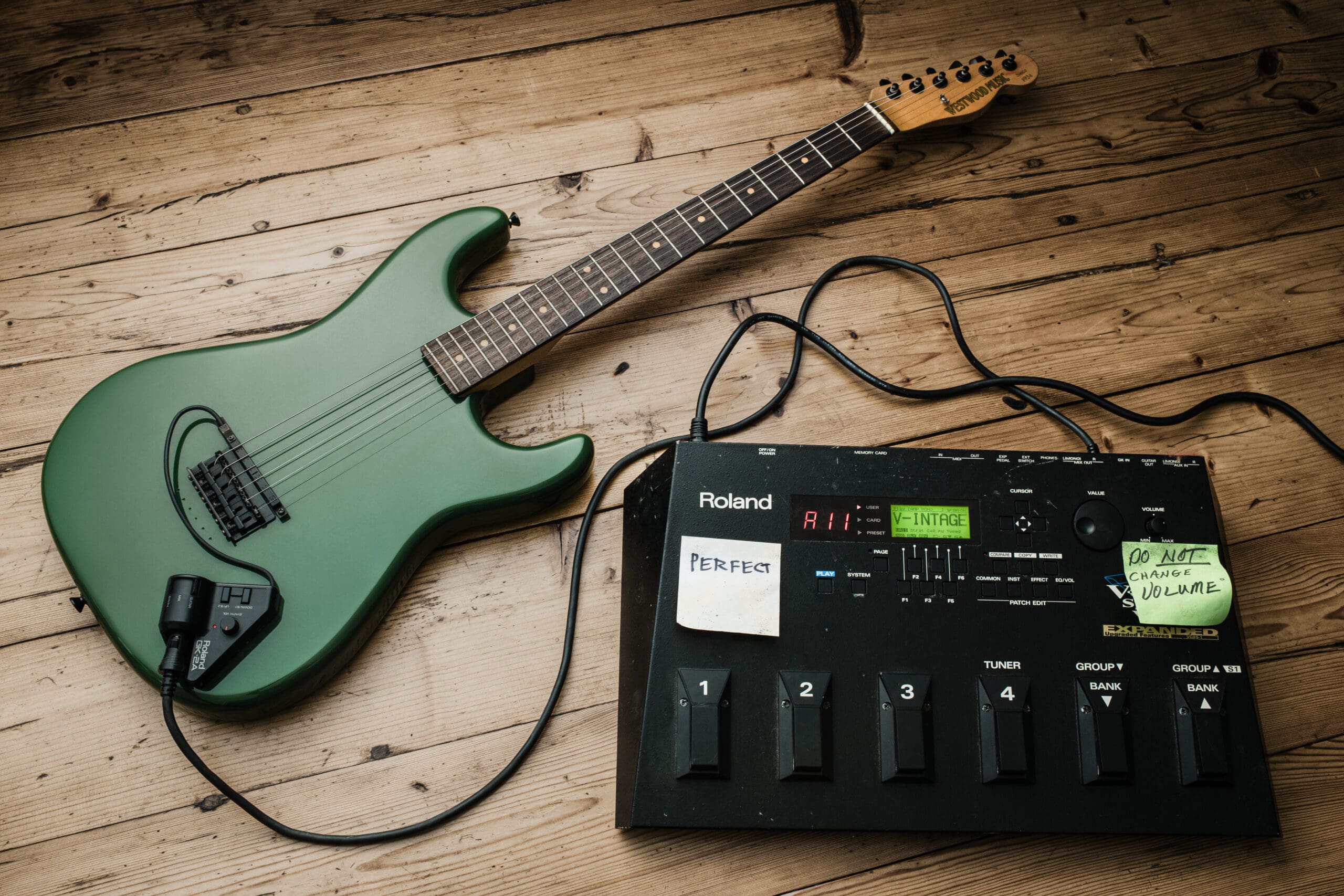
Photograph by Eleanor Jane
She launched into “Sex Kills” from her album Turbulent Indigo. But something was off. The sounds coming from the green guitar were drenched in delay and reverb, distorted and unintelligible. There was a palpable uncertainty in the crowd. This didn’t sound like the music they expected, like nothing they recognized. And what was this strange green guitar under her fingers? It barely sounded like a guitar at all. More like a rude synth.
Joni pushed on, into “Moon at the Window” from Wild Things Run Fast. The guitar sound still wobbled wildly out of control. From where I sat the crowd energy had turned against whatever new thing Joni was trying to do. A couple behind me collected their lawn chairs and left.
I looked on in dismay. I knew the backstory of Greenpeace.
There is a series of photographs of a young Joni, David Crosby and Eric Clapton taken in the backyard of Mama Cass Elliot’s Laurel Canyon home back in the late ’60s. Joni is new to the scene, having been brought to Los Angeles by ex-Byrd Crosby after he was entranced by a set she played in a Florida folk club. She sits cross-legged on the lawn playing her D-28, and the dour Clapton is focused hard at her, trying to decipher how these incredible songs and sounds are coming from this stunning blonde Canadian with a Martin guitar. He’s watching her hands for familiar chord shapes, but there are none.
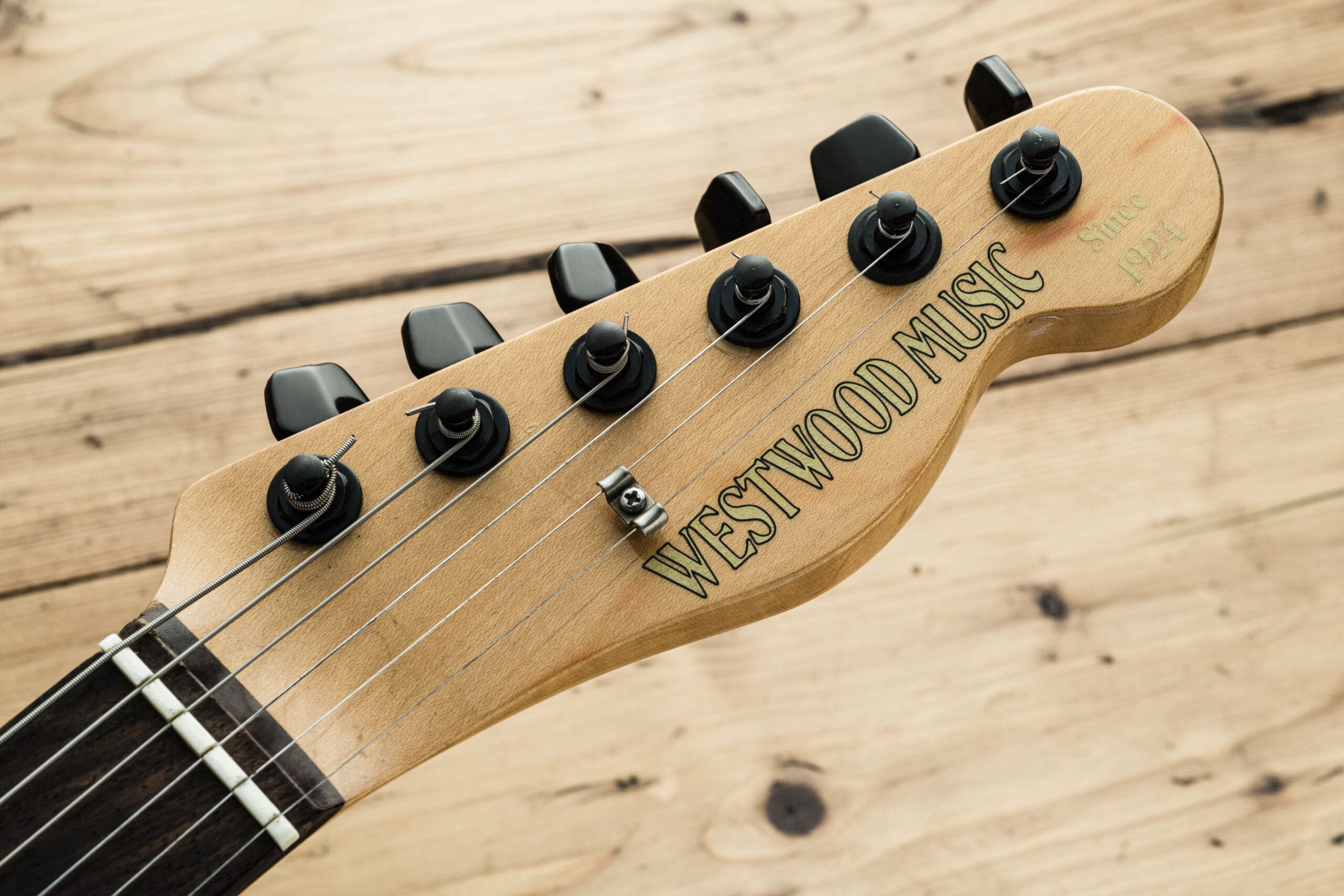
Photograph by Eleanor Jane
Clapton was stumped because Joni Mitchell was no ordinary guitar player. Her approach to the instrument was entirely of her own design. After picking up her first chords, as many did, with Pete Seeger’s How to Play Folk Style Guitar, Joni found Elizabeth Cotten’s fingerpicking style, then migrated to blues tunings and the more traditional open tunings, then began to invent tunings and voicings based on what sounded interesting to her ear in the moment. She would tune to numbers in a date, to a piece of music on the radio, to the environment she found herself in, to birdsong. Her process was one of invention, discovery, a breezy disregard for traditional forms. With her longtime guitar tech and archivist Joel Bernstein she created a numerical notation system to keep track of her tunings and which song they were assigned to.
To read the rest of the article, order the issue or subscribe now.