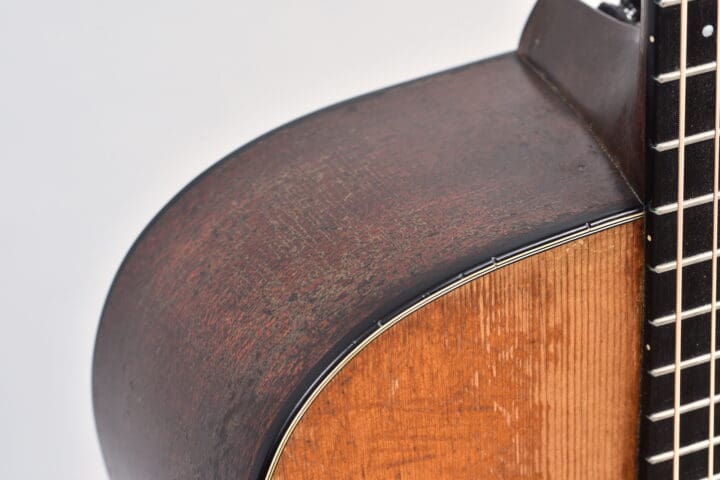
A short excerpt from our interview with Andy Shauf in the Fretboard Journal 57.
I first came into contact with Andy Shauf’s music by comparison. In high school, after a gig, someone asked me if he was one of my main inspirations, and I embarrassingly admitted not knowing him. Getting compared to someone I’d never heard before gave me this strange sense of kinship, like I was about to encounter an artist who would change my life. The Party had just come out; a sprawling narrative following a group of characters that weave in and out of songs, and a template he would go on to use for albums like Neon Skyline and Norm. Unsurprisingly, I became an instant fan. I’ve always been interested in both song and fiction, which Shauf seamlessly blends in an observant, cinematic and writerly way. His albums are their own kind of novels.
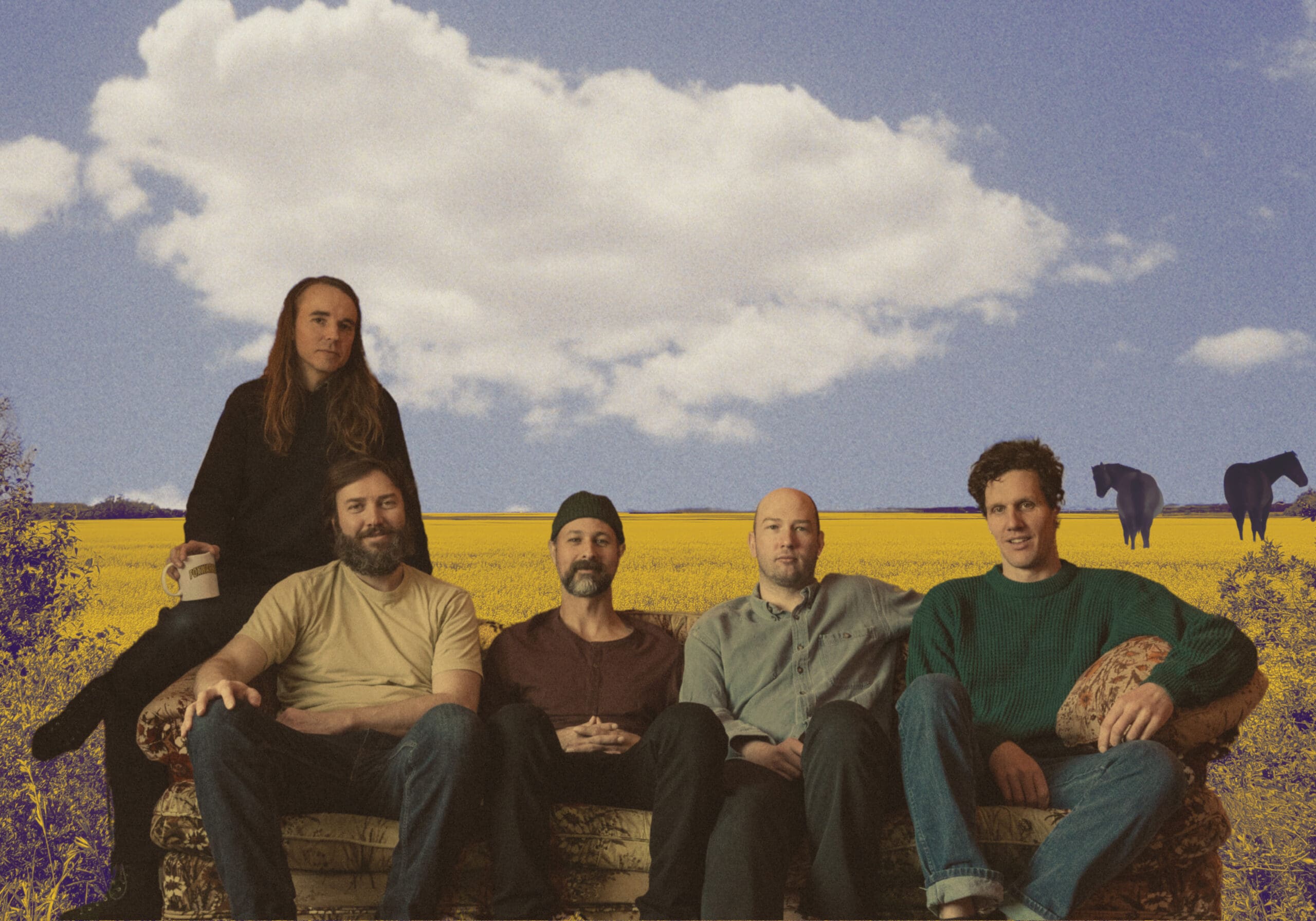
When Shauf is not releasing music under his own name, he is a member of the band Foxwarren, who have just released their highly anticipated second album entitled 2. The album’s distinct sound was born out of Shauf’s love for a specific piece of gear: the sampler, which he used to cut up and remix sound bites and recordings contributed by his bandmembers. Resultingly, 2 has this uncanny feel — real instruments rendered and synthesized through technology in a way that feels both incredibly Shauf-ian and distinct from any of his prior records.
What was originally supposed to be a conversation about a specific piece of gear inevitably turned into a discussion of writing and recording processes, a love of literary structures, a lost disco record, and, as promised, a six-stringed family heirloom.
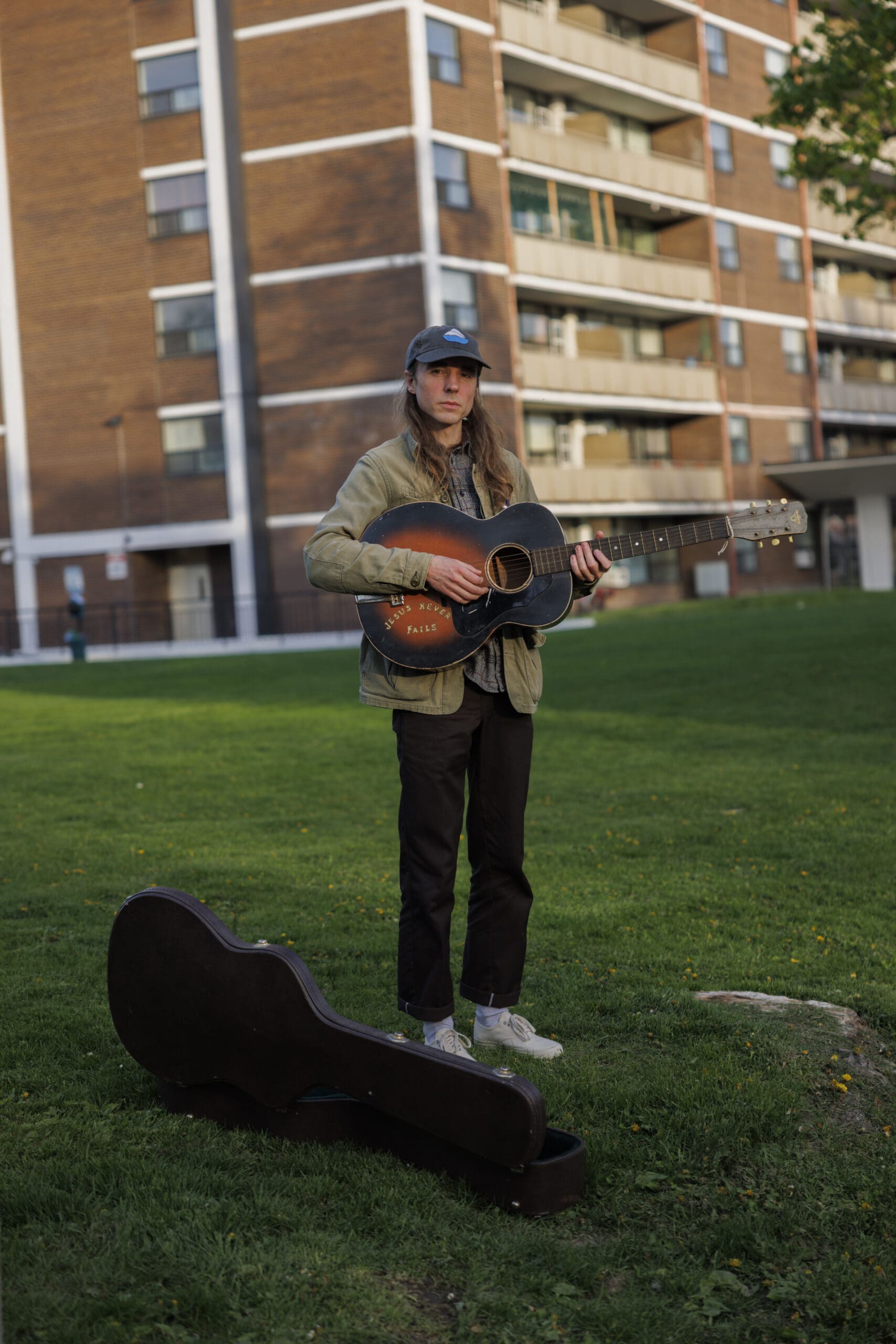
Photograph by Angela Lewis.
Sofia Wolfson: I would love to first hear about the out-of-the-ordinary process of making of this record.
Andy Shauf: We started out with the idea that we wanted to make a live, off-the-floor record, which is maybe the dream of all indie musicians, to have that kind of old-school experience. But it wasn’t going very well. But then we tried to figure out how we would be able to collaborate from a distance. It coincided with my buying a certain piece of gear, which was a sampler. It was a Maschine MK3, which is not what I use now, but the standalone version wasn’t available yet. I was trying to think of ways to change up my process where you sit at the guitar, you sit at the piano, and you end up reaching for the same notes all the time. Your hand is used to certain chords. I thought the sampler would be a good way to shake it up. My idea was: I’ll record a voice memo of myself playing an instrument, I’ll plug it into the sampler and chop it up, and then I can blindly find things just with my ear.
I was messing around with that idea around the same time that we started meeting for Foxwarren. We made this shared folder to upload song ideas to. I uploaded a song called “Dance” that was written on a chopped-up piano, and the guys really liked it. So I said, Okay, if you guys want this song, then we have to go in this direction of continuing to use the sampler and seeing how we can keep exploring this. At the time, I wanted to make two records. I wanted to make a synth record and a sampler record. Foxwarren called the sampler record. The synth record is actually my record Norm, which maybe isn’t the first thing you’d think of.
SW: So you were playing the sampler like it was its own instrument?
AS: Yeah, essentially. It’s like a middleman. I’ll just sit down at an instrument and noodle for a minute, and then I’ll put it into the sampler. There will be some good ideas in there sometimes, but my big problem is my short-term memory.
SW: What do you mean?
AS: Well, when I’m playing, I’m not thinking in theory. I think in hand shapes, like Phoebe from Friends. I forget what I’ve played. If something I play really strikes my ear and I want to revisit it, I will have forgotten it already. But when I’m using the sampler this way, I can do whatever I want, I can move my hands however far away from each other, and then I can find it again. It’s unlocked a lot of unique things that I would have never been able to find, or would have never been able to re-find in just letting my hands wander the keys.
SW: How did the contributions from the other members of Foxwarren start to factor in? Did you find that it was a similar process, or did the process develop and change because now you weren’t the only source material of the sound?
AS: The hardest thing for me is that I don’t have much of a singing range. My voice is limited in these ways that are hard to explain. When I find a melody, I know that I can sing it. When someone else writes a melody, I know that it’s going to be a struggle for me to sing it. It’s going to be too low or it’s going to reach too high. I don’t have enough of a range for what people think singers’ ranges should be. That was kind of a limitation that we were running into early where the guys would send in a song idea and the vocal melody would be something that I couldn’t do. So, having the sampler to reorganize their thoughts, if I couldn’t find anything directly from it, was really useful. It felt like a way that we could actually collaborate on ideas from a distance.
It’s kind of the same thing when you’re in the room collaborating on writing. A person’s idea is going to push you to expand on your own, and then they’ll expand on it, and so on. This felt like the distant equivalent of that.
There was also the limitation of us all having different degrees of home studio. Avery [Kissick] would send in a drum take and it sounds like he’s just playing drums in a basement, because he is. For a full take of that, there’s a certain dimension that you’re stuck with. But what we found is: That sound isn’t bad. It’s unique and it sticks out. If you use it more like a collage with looping and accentuating certain quirks in the sound, then it takes on a whole new life. It’s not as flat anymore, even though you’re totally flattening it. The repetition of it brings a vibe to it that isn’t just “basement.” It’s more interesting than that.
To read the rest of the interview, order the issue or subscribe.